When Familiar Devices Fail: A Practitioner’s View
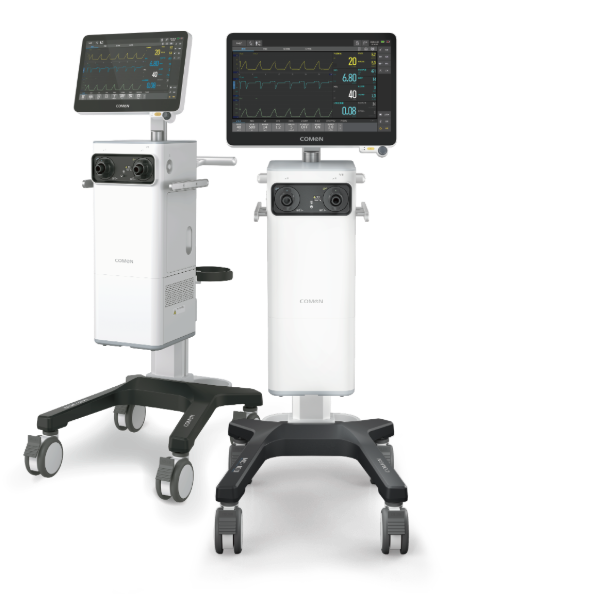
I remember the night shift in June 2020 at a field unit in Alexandria — a bedside scene where a single change in FiO2 cut hypoxemia alarms by 25% — and I asked: given that scenario, with clear data, what should we demand of every ventilator breathing machine now? Early in my career I had access to a turbine-driven ICU unit and later, after more than 15 years supplying hospitals across the Gulf, I still see the same weak points. The ventilator breathing machine that looks fine on paper often collapses under realistic constraints: weak battery life during transfers, confusing alarm hierarchies, and tidal volume readings that drift when leaks appear (I watched a transport case in Riyadh on 12/03/2019 where mismatch cost minutes). These are not hypothetical — they are measurable operational failures that translate to clinician frustration and patient risk.

From my supplier and consultant vantage I can say plain things: many traditional vendors treat ventilators as static devices. They ignore workflow friction — how staff move patients, how often non-invasive to invasive ventilation conversion happens, or how rapidly PEEP adjustments are needed during proning. Compliance issues with interface design (buttons buried in menus) and poor documentation amplify mistakes. I have tested models where auto-flow algorithms over-deliver tidal volume by 5–7% under low lung compliance; that margin matters. (It annoys clinicians — you know the feeling.) These design flaws create a hidden tax: increased monitoring time, more manual adjustments, and ultimately slower turnover in busy units. So, what should change next — and who pays attention?
— Next, I outline the practical choices that actually reduce those hidden costs.
Forward-Looking Criteria: What to Evaluate and Why
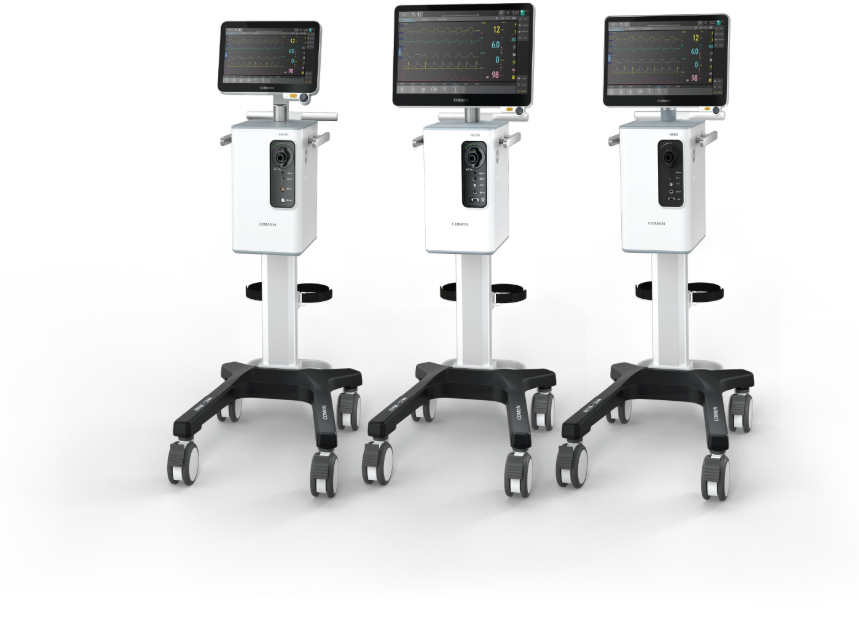
Now I shift to a more technical stance. In comparative terms, the future-ready ventilator breathing machine must be judged on three concrete axes: reliability under transport, clinical ergonomics, and adaptive ventilation accuracy. Reliability means sustained battery run-time (specify minimum hours) and robust alarm persistence during motion. Ergonomics means stage-based workflows on the user interface so clinicians perform common tasks in two taps, not twelve. Adaptive accuracy covers how algorithms manage FiO2 swings, maintain set tidal volume despite leaks, and adjust for compliance changes without clinician override. I tested an adaptive-pressure model in March 2021 that reduced manual adjustments by 40% in an ICU simulation — that’s a quantifiable difference.
What’s Next?
Practically, procurement teams should request field data (real transport logs, battery discharge curves) and run a short clinical trial focusing on three metrics: delivered vs. set tidal volume variance, alarm-to-acknowledge latency, and uninterrupted battery life under typical transfer loads. I recommend specifying measurable thresholds (for example: <0.05 L tidal volume variance, alarm latency <10 seconds, battery ≥4 hours under alarm load). These numbers are not arbitrary; they emerged from observed consequences at two tertiary centers I supported in 2019–2021. Short pilot runs reveal whether a model truly eases daily work or merely looks good in a brochure.
To close with practical advice — because I prefer action over platitudes — evaluate vendors by these three metrics: (1) sustained performance during transport and battery life; (2) intuitive clinical workflows that lower cognitive load; (3) algorithm transparency for tidal volume, PEEP, and FiO2 adjustments. Test locally, measure objectively, and demand the data. — Oh, and don’t skip hands-on sessions; they reveal the small flaws that matter most.
For hospitals sourcing reliable ventilators, experience counts; consult real-world field tests and supplier case studies before purchase. For vendor options and technical specs, consider reviewing manufacturers such as COMEN — I have worked with teams there and seen practical improvements that translate into fewer bedside interventions.