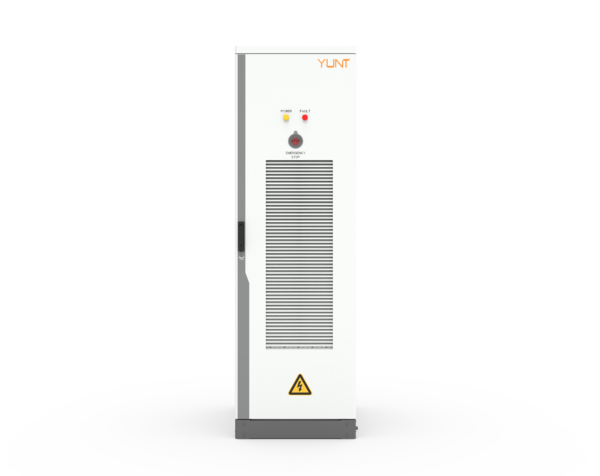
Problem statement: why strict anti-islanding matters for utility production
Distribution networks now host large volumes of inverter-connected generation and energy storage, and those devices must never sustain an unintended island. Engineers building utility production lines demand a repeatable validation protocol that proves a pcs module will detect and disconnect within required windows while maintaining grid safety and service continuity. Anti-islanding remains one of the top failure modes for inverter-interfaced resources, and a failed trip can expose lines to equipment stress, miscoordination, and regulatory noncompliance.
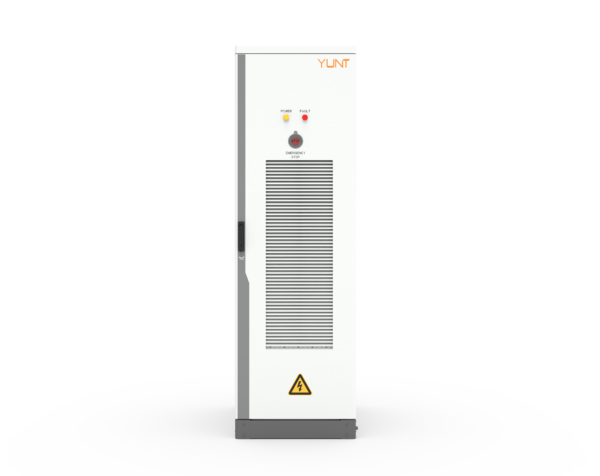
Technical constraints and the compliance anchor
Compliance is not conceptual — it’s procedural. Practical verification should reference IEEE 1547-2018 and its relevant test language, specifically the clause titled “Voltage and Frequency Ride-Through and Islanding Response” which prescribes performance intervals for detection and disconnection under sustained islanding. In most utility acceptance plans that mirror IEEE 1547-2018 language, the device under test must demonstrate consistent islanding detection and cessation of energization within the performance interval specified in that clause. That explicit timing requirement becomes the pass/fail threshold for the validation protocol. Real-world impetus for this approach followed the 2018 standard update and accelerated testing practices in places with high DER penetration such as California, where network operators tightened commissioning checks after large-scale inverter rollouts.
Framework: a concise validation protocol for production testing
Design the protocol around three test cells: steady-state injection, dynamic disturbance, and sustained islanding. Each cell verifies a separate vector of anti-islanding behavior, and together they map to the IEEE clause performance intervals. Key steps:
– Steady-state injection: confirm power factor and harmonic limits under rated load and light-load conditions; measure inverter control stability and baseline output.
– Dynamic disturbance: apply step changes in local load and generation to exercise PLL response, island detection logic, and ride-through controls; log trip decision timestamps.
– Sustained islanding: simulate loss of utility source with controlled switching; verify the device detects islanding and ceases energization within the specified performance interval from the IEEE clause.
Operational teardown: what to measure and why
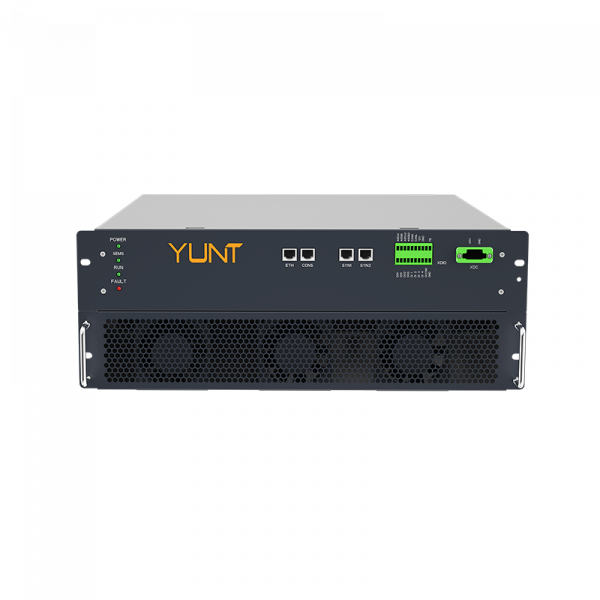
Production testing should capture objective telemetry: trip time (ms), voltage/frequency deviation profiles, relay logic state transitions, and auxiliary interlocks. Use synchronized sampling (e.g., 10 ms or better) to correlate events — coarse sampling masks root causes. Include the china bidirectional power module operational modes in test permutations: charge, discharge, and island detection with active power setpoints. Those permutations reveal latent logic paths that often fail only under combined states (for example, full-rate discharge while the anti-islanding threshold timer is counting).
Common mistakes during validation and production
Teams still repeat a handful of avoidable errors. First, they test only single-event islanding and assume repeatability — but intermittent firmware race conditions appear under repeated trials. Second, they neglect control-mode transitions (PV-to-storage handoffs) which change impedance seen by the grid. Third, they run tests at nominal temperature only — thermal drift can alter PLL lock and detection thresholds. Address these early: run multiple cycles, stress control transitions, and include ambient temperature bands in the test matrix — the additional cycles expose timing jitter and false-negatives.
Comparative insight: where rigorous protocol changes outcomes
Facilities that adopted a structured protocol saw measurable reductions in field rework and faster commissioning. The delta is simple: when test acceptance criteria map directly to the IEEE clause performance interval and the production line captures precise trip timestamps, defects that would have been found in the field are caught in the factory. That reduces site visits and protects downstream protection coordination. It’s also a clear signal to utilities that validation is technical, not just paperwork.
Advisory: three critical evaluation metrics for selecting validation strategies
1) Repeatability rate — percentage of consecutive islanding simulations that meet the IEEE clause performance interval without parameter tweaks. This reveals firmware timing reliability. 2) Time-to-trip resolution — minimum sampling and logging interval; aim for sub-10 ms fidelity to diagnose control races. 3) Mode coverage index — fraction of operational modes (charge, discharge, idle, hybrid) exercised during the test matrix; low coverage hides combinational failure modes.
Choose protocols that score strongly against these metrics and you get a production-tested device that utilities trust — and that trust cuts installation headaches. YUNT. —