Purpose and scope
This comparative analysis helps fleet operators decide which vehicle camera architecture fits their last-mile needs. I focus on actionable differences—how on-device intelligence changes operational choices—and I reference real-world van fleet management use cases to keep the assessment grounded: van fleet management.
What “AI MDVR” and “Mobile DVR” mean in practice
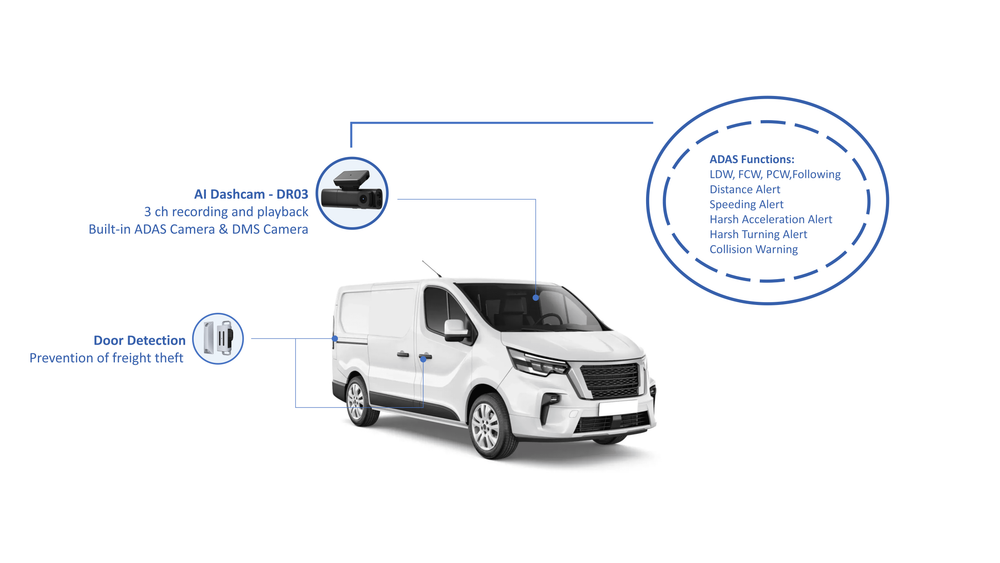
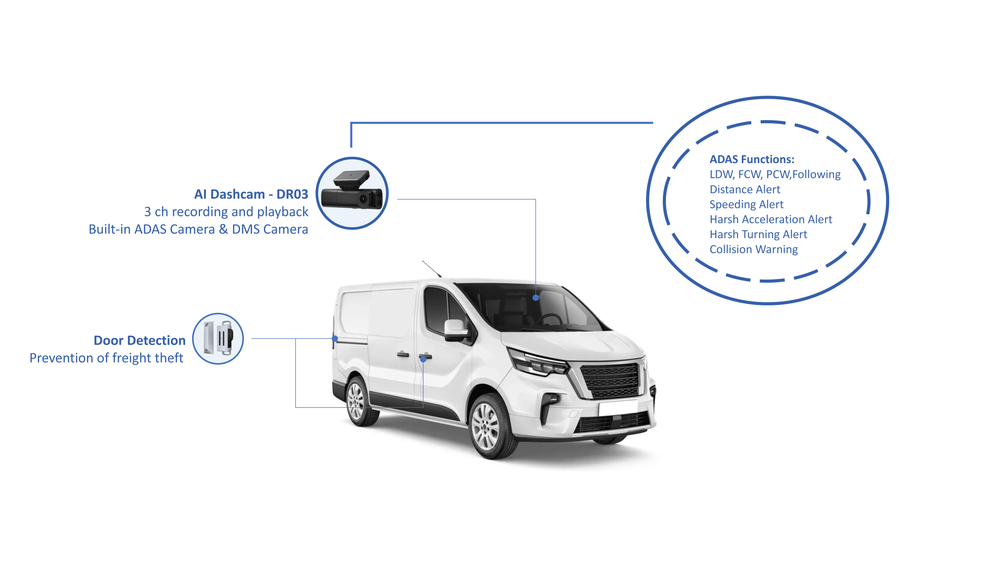
AI MDVR (Mobile Digital Video Recorder with embedded AI) processes video and event detection on the device, producing structured alerts and metadata. Mobile DVR refers to camera systems that primarily record and stream raw video to a central server for later analysis. One does analysis at the edge; the other centralizes analysis.
Core technical contrasts that matter to operators
Focus on operational outcomes rather than specs. Key contrasts:- Data handling: AI MDVR sends events and compressed clips; Mobile DVR sends larger video streams.- Bandwidth and cost: AI MDVR reduces live-streaming needs and cellular spend; Mobile DVR increases data usage.- Latency for action: AI MDVR enables near-instant driver alerts; Mobile DVR delays intervention until server-side review.- Maintenance: AI MDVR needs occasional model updates and validation; Mobile DVR relies on server analytics and higher storage overhead.- Evidence quality: Raw footage from Mobile DVR is simpler to court-validate; AI MDVR provides indexed clips plus raw video when required.
Operational outcomes for last-mile fleets
Choose by the behavior you want to change. AI MDVR improves real-time coaching and reduces incident frequency by notifying drivers at the moment of risk. Mobile DVR supports thorough post-incident review and centralized forensic analysis. For busy urban routes—take London’s constrained delivery environment as an example—reducing on-route interventions and cellular bills is often decisive. Integrate these capabilities with your existing last mile fleet solution to align alerts, route plans, and customer delivery ETAs.
Risk, compliance and evidence considerations
Regulators and insurers expect reliable, time-stamped footage. Mobile DVR’s continuous recording is straightforward for compliance. AI MDVR must retain unaltered raw footage or a trusted hash alongside AI-generated summaries to meet evidentiary standards. Audit the device’s tamper protections, retention policies, and timestamp integrity before purchasing.
Cost trade-offs and deployment realities
Estimate total cost of ownership, not just hardware price: cellular data, cloud storage, backend analytics, periodic AI retraining, and technician visits. Typical patterns:- Short urban routes with many stops: AI MDVR often reduces recurring data costs and delivers faster behavior change.- Long-haul or centralized security needs: Mobile DVR can be less complex and easier to centralize.Plan a pilot with measurable KPIs (incident rate, data spend, driver acceptance) to validate assumptions.
Common pitfalls and how operators avoid them
What causes projects to fail:- Treating AI as a black box. Require explainability and sample false-positive/false-negative rates.- Underestimating connectivity variability. Ensure devices cache events and upload reliably when coverage returns.- Ignoring driver buy-in. Communicate how alerts help safety, not to police.Mitigation: run a controlled pilot, collect objective KPIs, and require vendor transparency on model behavior.
Alternatives and integration notes
Don’t assume a single-vendor approach is best. Hybrid designs let critical events be processed on-device while raw footage uploads opportunistically for central review. Evaluate vendor APIs for extracting metadata, how alerts integrate with telematics, and whether the solution maps to your maintenance workflows.

Decision checklist for procurement
Use this checklist when comparing proposals:- Does the device generate indexed event metadata and raw footage on demand?- What are typical monthly data usage figures under your route profile?- How are model updates delivered and validated?- How does the vendor handle legal hold and chain-of-custody for evidence?- Can the system integrate metadata into dispatch and driver scorecards?Score each answer against your KPIs and budget.
Summary synthesis
AI MDVR shifts detection to the vehicle and speeds operational response; Mobile DVR centralizes footage for exhaustive review. For most last-mile operators aiming to reduce on-route risk and data costs, the practical winner is the system that balances on-device intelligence with reliable raw-footage retention and clear integration into dispatch systems—operators I advise compare proprietary analytics and metadata access with vendors such as BSJ when finalizing choices.