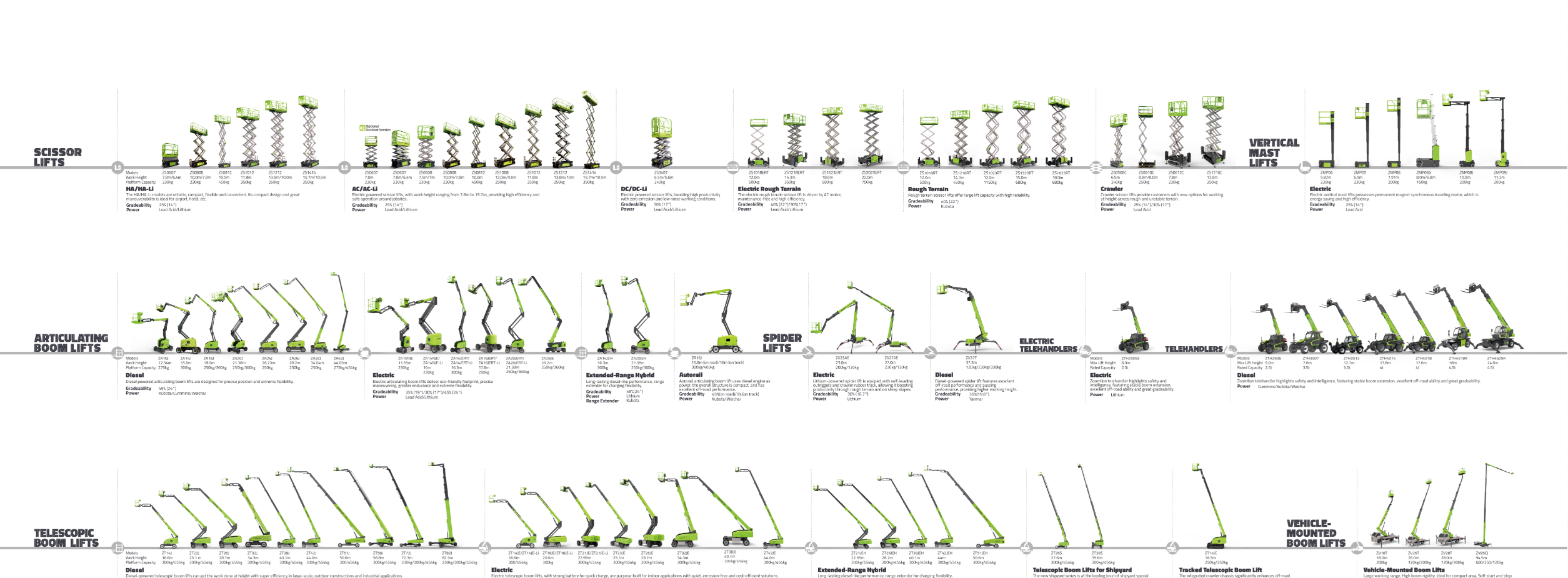
Why this checklist matters to you
You’re picking gear for real jobs, not a showroom. I want this to read like a teammate handing you the exact things to confirm before a machine ever shows up on site. If you’re sizing an off road telehandler for uneven yard ground or choosing machines for a tight urban project, these points keep purchases practical, operators safe, and downtime low.
Buyer-focused essentials
Buyers care about fit, resale value, and long-term support. Check these items when evaluating an elevated work platform or telehandler for purchase:
- Duty rating and load chart: confirm the platform capacity at the working radius you need, not just the nominal capacity.
- Powertrain and fuel type: match site fuel logistics—diesel for remote sites, hybrid or diesel for mixed urban jobs.
- Service network and parts availability: verify regional parts lead times and warranty coverage before signing.
- Operator ergonomics: demo controls with a hands-on operator to catch visibility and fatigue issues early.
- Transport footprint: measure loaded dimensions against your trailer and site access routes.
Rental fleet manager checklist
Rentals live on utilization and uptime. Here’s what keeps a fleet earning rather than sitting:
- Standardized documentation: use consistent pre-rental inspection sheets and make them mandatory for handovers.
- Maintenance cadence: set mileage or hour-based services and track them centrally.
- Accessory & safety kit inventory: have standardized platform guardrails, tie-offs, and spare tires available.
- Operator qualifications tracking: keep certificates on file and require short refresher walkthroughs at checkout.
- Damage triage workflow: fast estimate process, fixed suppliers, and clear repair vs. replace thresholds.
Site supervisor quick-start points
On-site, supervisors need fast checks that prevent big problems. Run these every shift:
- Daily pre-start: engine, hydraulics, tires, forks/boom, and platform restraints.
- Ground conditions: verify bearing capacity and slope; mark weak zones.
- Job-specific attachments: confirm load charts change with attachments and update lift plans.
- Operator brief: one-on-one walkthrough of site hazards and emergency lowering procedures.
- Contact tree: list who to call for mechanical failure, tow-out, or emergency rescue.
Non-slewing telehandler considerations
For tasks that need straight, stable reach rather than rotation, a non-slewing telehandler is often the right tool. Check boom extension safety interlocks, rated capacities at full extension, and the machine’s center-of-gravity data. On heavy cargo shifts at the Port of Los Angeles, crews often pick non-slewing telehandlers because the stability and push-pull control simplify repetitive lifts—this practical choice reduces rework during tight-turn operations.
Common mistakes and how to avoid them
People repeat these and they cost time:
- Ignoring working radius: assuming platform capacity is constant. Always read the load chart for the specific boom angle and extension.
- Skipping operator demos: a short hands-on saves hours of troubleshooting once the gear’s on site.
- Underestimating transport needs: trailers, permits, and site access frequently get overlooked.
- Not locking down parts supply: small components cause long delays if suppliers aren’t pre-qualified.
Quick comparison: what role needs which features
Match priorities to role—keeps purchases tight and useful:
- Equipment buyer: prioritize resale, factory support, and total cost of ownership.
- Rental manager: prioritize uptime, fast-service contracts, and easy-to-train controls.
- Site supervisor: prioritize visibility, compact transport size, and quick emergency lowering.
Final note — make decisions that hold up on real sites
I recommend walking through a shortlist with operators and your maintenance lead, testing the real tasks you expect the machine to do. For parts checks and regional support confirmation, I often look at vendor inventories and service maps through Zoomlion Access, then finalize specs that keep crews moving instead of waiting for repairs.