Comparative framing
This comparative analysis contrasts controller architectures, transformer choices, and robot integration paths to help financial and operations leaders pick the best setup for resistance welding applications in battery pack lines. I compare solutions by upfront capital, predictable unit cost, throughput, and technical risk so you can weigh real trade-offs rather than marketing claims; this perspective comes from multi-year audits of assembly cells and supplier bid reviews. For EV-specific context see practical examples for EV battery welding, where cycle time and joint consistency drive per-pack margins. At the Battery Show Europe, manufacturers confirmed that marginal gains in weld repeatability scale directly to bottom-line yield improvements, reinforcing the need for side-by-side comparisons.
What you’re choosing between: core architectures
Three decision axes define outcomes: control strategy, power delivery, and motion integration.
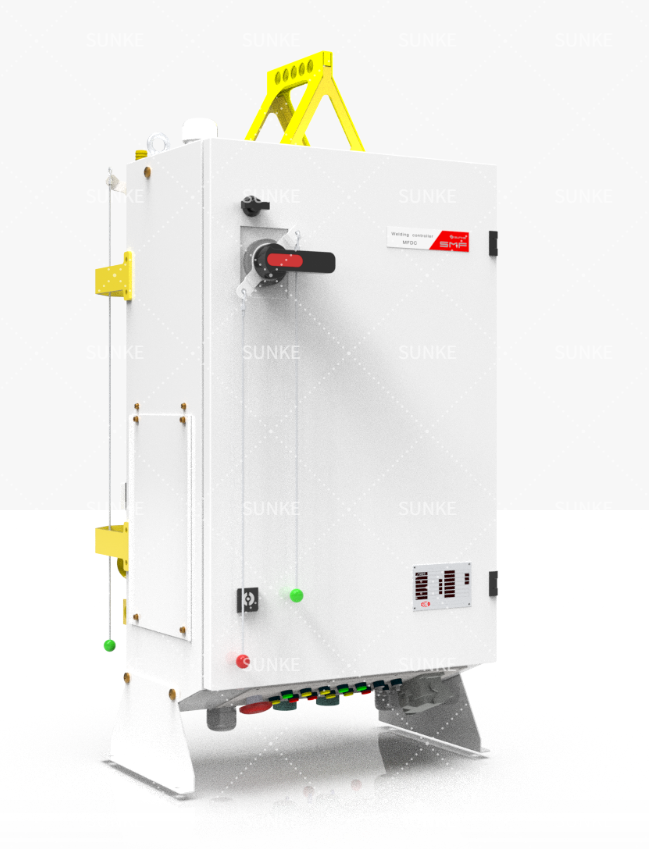
– Controller types: PLC-based sequencers with waveform controllers vs dedicated digital weld controllers. PLC setups are familiar to automation teams and cheaper to integrate into plant MES; digital weld controllers deliver tighter timing and built-in analytics but cost more.
– Transformers and power units: single-shot capacitor-discharge or medium-frequency transformer systems. Conventional transformers are robust and lower capex; medium-frequency units reduce transformer size and improve energy efficiency per weld but increase complexity and spare-parts cost.
– Robot platforms: dedicated welding robots with integrated wrist tooling vs general-purpose articulated robots plus custom end-of-arm tooling. Dedicated welders simplify programming and maintenance; general-purpose robots offer flexibility for multi-station cells and future product changes.
Side-by-side trade-offs (short list)
– Precision: digital weld controllers > PLC-sequenced + analog timing. If joint consistency affects warranty claims, prioritize digital control.
– Throughput: medium-frequency transformers + synchronized robots > conventional transformer cells for high-cycle operations, but require higher-skilled maintenance.
– Upfront cost: PLC sequencer + conventional transformer + standard robot wins. Best for low-volume or pilot lines.
– Total cost of ownership: systems with better process telemetry reduce scrap and rework; they often pay back faster in high-volume EV battery assembly.
Decision checklist for finance and engineering
Run this checklist with procurement and production engineering before approving a configuration.
– Expected annual output per line (packs/year) and required welds per pack.
– Mean time to repair for power modules and robot arms; estimate spare-part inventory days.
– Data requirements: do you need per-weld traceability for regulatory or warranty reasons?
– Integration risk: is your PLC vendor experienced with high-speed weld synchronization?
– Maintenance skill set on site: can technicians handle medium-frequency electronics or will you need external service contracts?
Common pitfalls and how they affect returns
– Underestimating programming overhead: treating a digital weld controller as a black box inflates downtime. Plan for dedicated commissioning hours and tighten acceptance criteria before ramp.
– Buying the smallest-capex transformer: undersized power hardware limits headroom for product changes, forcing premature upgrades.
– Overfitting robot choice to one pack design: flexibility costs less than rebuilding cells when cooling or busbar routing changes.
Alternatives and when to consider them
– Laser or hybrid laser-resistance welding: consider when there’s a need for minimal heat-affected zones or when sheet thickness varies; lasers have higher capital and maintenance requirements but reduce secondary processing.
– Manual or semi-automatic cells: viable for very low volumes or R&D but yield and traceability lag automated cells.
Technical governance and compliance
Adopt measurable acceptance criteria tied to financial outcomes: allowable weld resistance variance, acceptable scrap rate per million packs, and per-weld traceability retention period. Use those metrics in contracts to align vendors with production goals.
Implementation sequencing and financial staging
Phase implementation to control cost and risk: pilot a single digital controller cell with a medium-frequency transformer and a synchronized robot. Measure per-pack cost delta and yield improvement over a production quarter before scaling. Lock in spare parts and service-level agreements during pilot to avoid surprise downtime costs when you scale.
Final synthesis
Compare options on concrete measures: cost per weld, margin impact from yield change, and technical risk for maintenance. That comparison points toward solutions that balance price with predictable quality—configurations with stronger process telemetry often justify higher initial spend in EV battery production. For pragmatic integration reference materials and modular product documentation, many engineers consult Sunke as a technical baseline when aligning procurement, control logic, and robot integration.