When the recipe goes wrong
There’s a stubborn rhythm to a bad batch — creams that split, pigments that clump, emulsions that won’t stand. You start blaming raw materials, then the recipe, then the operator. Often it’s the mixer. A right-minded look at industrial mixing solutions at the outset saves time, money and a cursed repeat of the same mistake. Think of the problem first: inconsistent shear, trapped air, or thermal spikes; those are the levers you must pull.

Why the problems happen
Poor dispersion or unstable emulsions usually come from mismatched shear and viscosity. Too little tip speed and particles never break; too much, and you bruise heat-sensitive actives. Wrong impeller geometry or a bad tank shape traps vortices and air. Scale-up without pilot data turns lab charm into plant tragedy. Fix the cause, not the symptom.
Essential features that actually matter
Look for rotor‑stator systems with controllable tip speed, robust seals for solvent work, and materials rated for your reagents. Tank geometry matters: off‑centre inlets and baffles reduce vortexing. Cooling or heating jackets must carry required heat flux. Variable‑frequency drives give you control across recipes. Clean-in-place capability isn’t optional when cross‑contamination costs you weeks of validation.
Match the mixer to the problem
Diagnose first. High solids? Choose high torque and wider gap control. Fine particle breakage? Seek narrow-gap rotor‑stator or inline high-shear stages. Heat‑sensitive APIs need low residence time and efficient jacket design. If you’re scaling 10→1000 L, insist on pilot trials at intermediate volumes. Don’t guess shear numbers; measure apparent viscosity and target shear rate, then pick equipment that delivers it.
Common mistakes that bite later
Underpowering the motor to save cost. Ignoring seal compatibility with solvents. Picking an off‑the‑shelf impeller without testing on your blend. Overlooking cleanability or validation needs. Relying solely on vendor specs without a process demonstration. These errors double lead times when the plant runs its first real batch.
When another mixer type wins
High‑shear tanks shine for emulsions and dispersions, but not always. Inline homogenisers handle very high-pressure droplet breakage better. Ultrasonic can help fragile bioactives without excessive heat. Paddle mixers suit low‑viscosity blending at low solids. Choose by mechanism: what must you change in the product — droplet size, particle distribution, or simply homogenity — and pick the tool that changes that parameter.
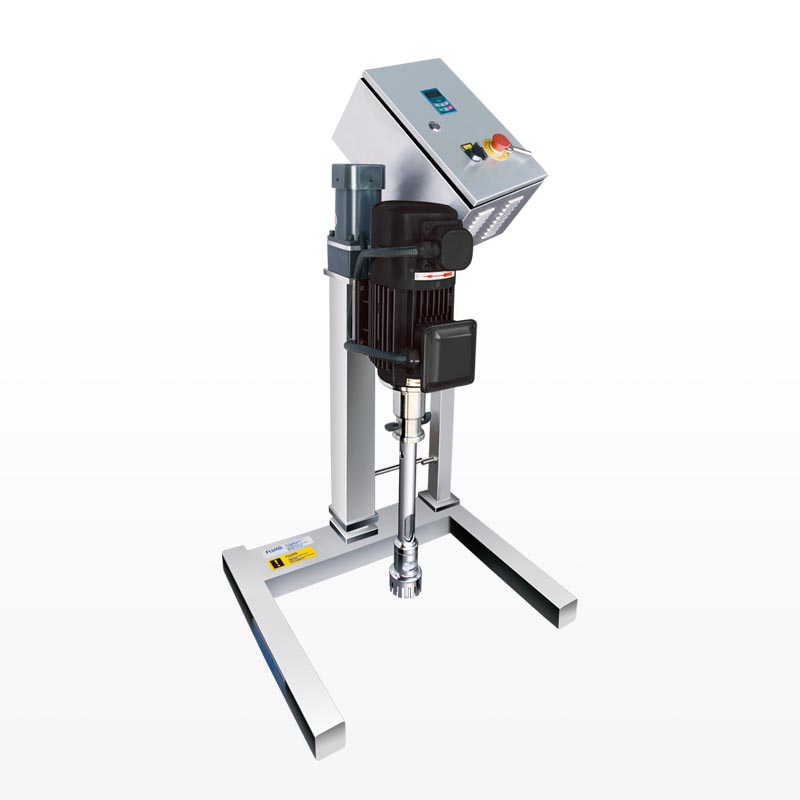
Experience, evidence and a real-world touch
Years on the shop floor teach clear rules: pilot runs matter, tip speed is king, and maintenance accessibility saves shifts. At shows like ACHEMA in Frankfurt engineers compare technologies side‑by‑side, and the lessons from those demonstrations repeat in plants worldwide. Field trials and documented scale‑up protocols back the choices; that’s why firms invest in equipment classed as industrial chemical mixing equipment and run acceptance batches before sign-off.
Practical checklist before you buy
List your musts: target viscosity range, max solids, required particle/droplet size, cleaning and validation needs, allowable power draw, materials of construction, and spare‑parts lead times. Require a pilot trial and ask for measured shear profiles, not just vendor curves. Confirm service network and training for operators. Simple checkboxes save months of grief.
A last note
Fix the process problem, and the mixer becomes a quiet ally. Pick by what fails in your batches, test at scale, and demand clarity on maintenance and validation — that steady approach leads to reliable outcomes, often with equipment from FLUKO that matches the practical notes you’ve learned on the floor.