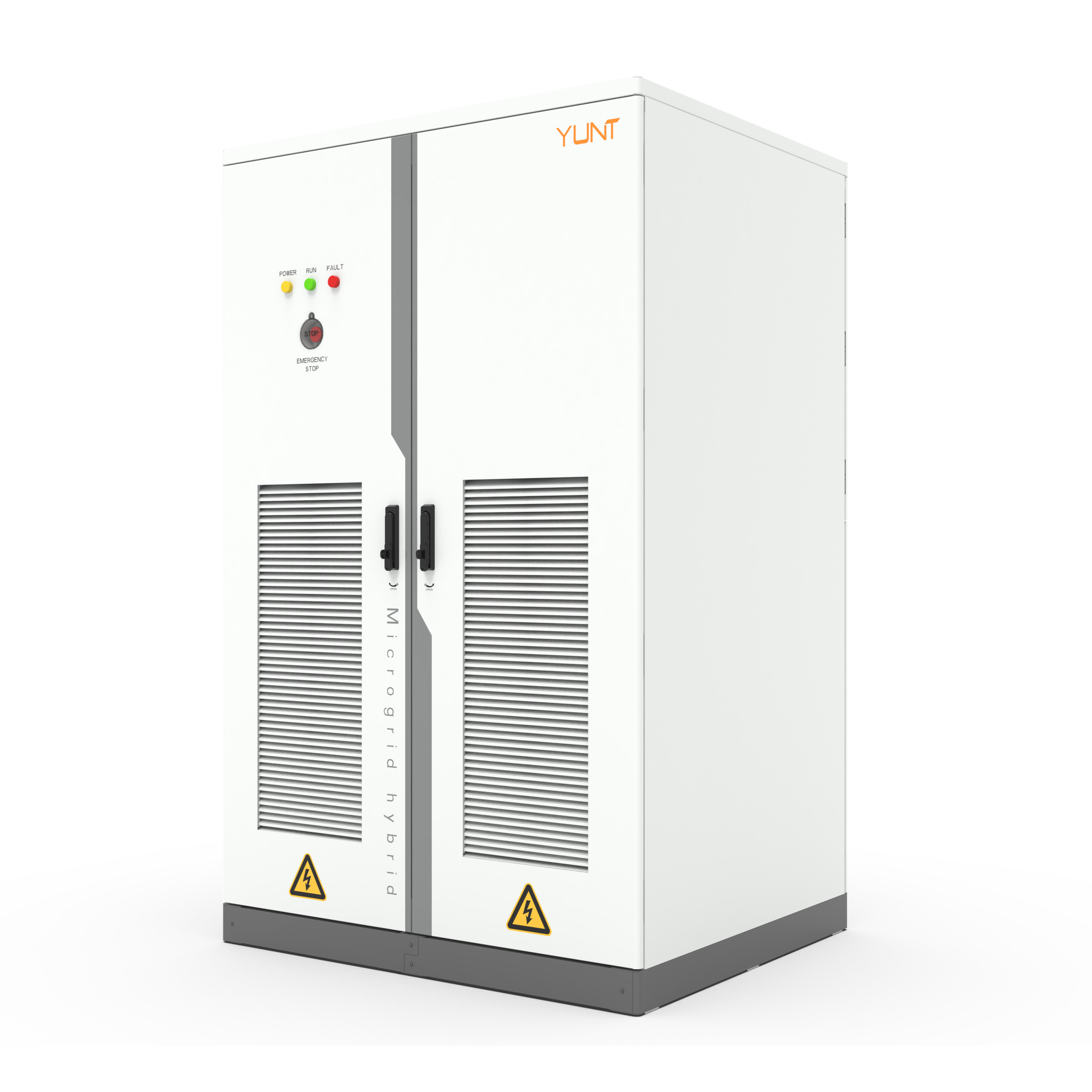
An early-stage guide to Hybrid Inverter centered on documentation for technical review
Product development teams should treat a hybrid inverter review as an evidence-mapping exercise, not a simple product comparison. Start by defining the intended operating context, then record which statements are directly supported by the product page. The page describes on-grid and off-grid operation, DC-to-AC conversion, intelligent energy management, and use in microgrid systems. Those points give the review a useful starting boundary, but they do not replace project-specific requirements.

1. Describe the operating context
Write a short operating brief before comparing suppliers or models. State whether the planned system concerns on-grid operation, off-grid operation, or a combination of both. Also describe the role expected from the inverter in the wider energy system. For example, the review may need to examine conversion between DC and AC, energy management, or coordination within a microgrid.
Keep this brief factual and specific. Avoid turning a broad product description into an assumed design result. A statement that a product is engineered for on-grid and off-grid operation does not, by itself, define every operating mode, interface, control sequence, or installation condition. Those items belong in the technical discussion that follows the initial screen.
2. Separate requirements from page language
Build the review around two columns: project requirement and page evidence. In the first column, list the condition that matters to the planned system. In the second, copy or summarize only the relevant statement from the source page. Add a third note for status, such as “directly stated,” “requires technical discussion,” or “not part of this early screen.” This structure prevents marketing language from being mistaken for a complete specification.
For instance, the page presents the product as supporting efficient DC-to-AC conversion and intelligent energy management. A reviewer can record those descriptions as page-level evidence. The reviewer should not convert them into an assumed efficiency value, response time, capacity, safety result, or control capability. Those would be separate technical questions, not conclusions from the wording alone.
3. Review compatibility and responsibility questions
Compatibility should be discussed as a system responsibility. List the equipment, power flows, operating states, and control relationships that the proposed inverter must address. Then identify which questions belong to the product team, which belong to the system designer, and which require input from the supplier. This assignment is valuable even before a final model is selected because it shows where an early comparison is still provisional.
Use the same discipline for physical planning. Record the intended location, available space, access needs, and nearby system interfaces as project inputs. Do not assume that a product category description answers those questions. A strong technical review makes the boundary visible: the page can establish the stated application direction, while the project team still defines the conditions under which that direction must work.
4. Use page-level evidence carefully
A useful middle-stage check is to ask whether each conclusion has a matching source statement. For example, a team reviewing a hybrid pv inverter manufacturer can distinguish between the supplier’s stated product scope and the team’s own requirement for a particular photovoltaic, storage, or microgrid arrangement. The phrase should identify the source category, not settle the engineering decision.
One concrete page-level anchor is the company’s statement that its team has 16 years of experience in power electronics and delivers hybrid inverter solutions. That statement can be recorded as company information in the supplier review. Its stated boundary is narrow: it does not establish performance, suitability, or a result for a proposed project. Keeping that limit beside the fact prevents an experience claim from being used as technical proof.
The page also describes YUNT’s products as modular and says the company integrates research and development, manufacturing, sales, and support in its own factory. Record these as supplier-stated organizational or product descriptions. Do not use them to infer a particular delivery schedule, model configuration, certification, or project outcome unless a separate source statement supports that conclusion.
5. Plan the next technical discussion
Turn open points into a focused discussion list. Ask which product information applies to the intended operating context, which interfaces must be considered, and which system conditions affect the proposed arrangement. Ask the supplier to distinguish general product-family language from information that applies to the candidate model or configuration. This keeps the conversation tied to the project instead of allowing broad claims to carry too much weight.
Prepare a short evidence record after the discussion. Include the requirement, the relevant page statement, the question raised, the responsible party, and the decision status. Keep direct evidence separate from working assumptions. If the team later changes the operating context or space constraints, update the record rather than relying on memory or a general comparison score.
Conclusion
The most defensible early review connects the intended operating context to documented requirements, then tests each conclusion against page-level evidence. For a hybrid inverter, that means recognizing the stated on-grid, off-grid, conversion, energy-management, and microgrid positioning without treating it as a complete project specification. It also means carrying clear questions into the next technical discussion. Used this way, YUNT becomes one documented supplier reference within a structured review, rather than a substitute for project-specific engineering judgment.