Introduction — comparative lens on procurement
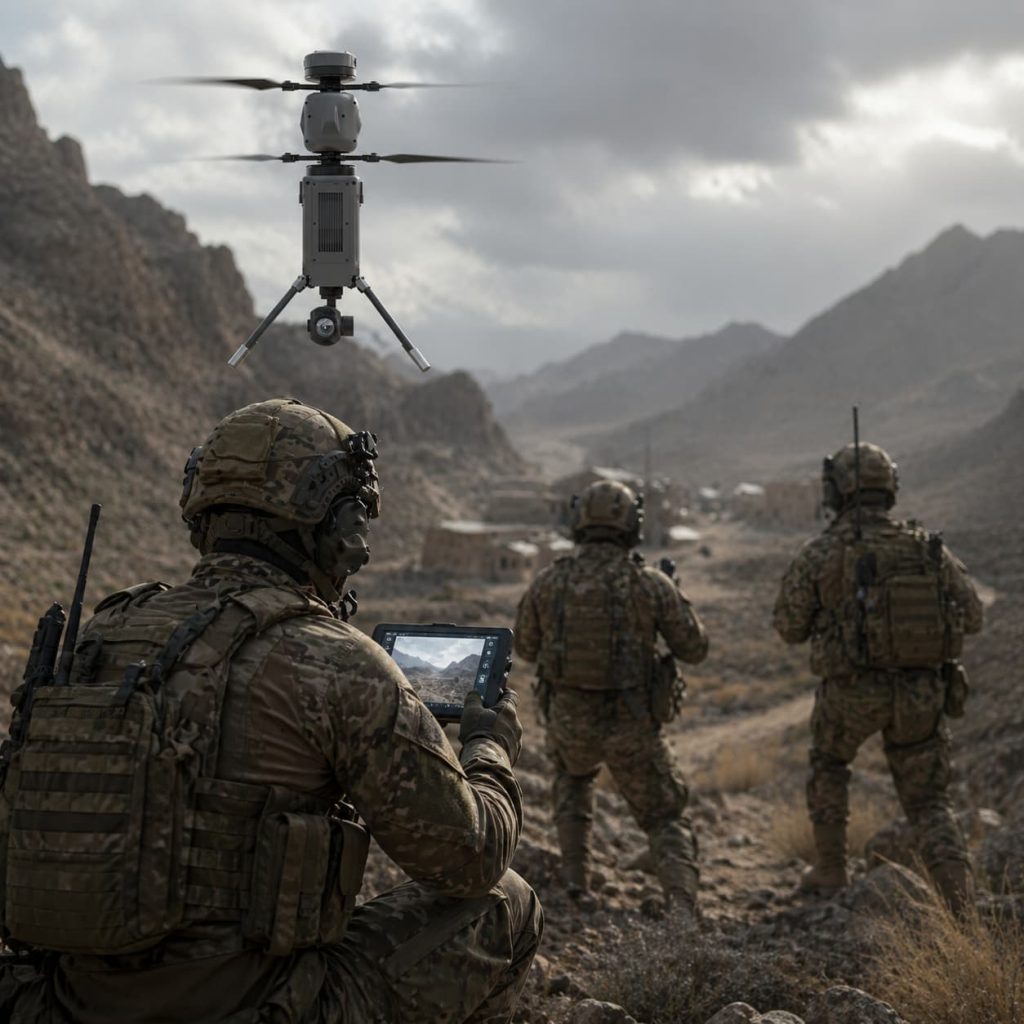
Procurement teams buying mission-capable quadcopters must weigh hardware integrity as a primary variable, not an afterthought. This comparative insight examines how a Hardware Root of Trust (RoT) shifts risk profiles across platforms — from open consumer frames to hardened coaxial architectures — and why buyers gravitate toward designs that minimize firmware attack surfaces. In compact designs like coaxial drones, counter-rotating rotors reduce mechanical footprint, but that advantage only pays off if the flight controller and RoT are architected to resist tampering.

Why hardware RoT changes the vendor comparison
An RoT anchors device identity to immutable silicon, enabling secure boot, measured firmware updates, and cryptographic attestation. From a budget-holder’s perspective this is measurable: lower lifecycle risk, fewer emergency patches, and reduced indemnity exposure. Compare two suppliers: Vendor A embeds a TPM-equivalent with secure boot while Vendor B relies on software-signed images only. The procurement delta is not just price per unit — it’s expected mean-time-to-compromise and operational availability under contested conditions. Industry terms like IMU and ESC matter here because sensor spoofing and motor controller manipulation are common attack vectors; RoT mitigations raise the cost of those attacks.
Technical trade-offs and performance metrics
Implementing RoT affects firmware pipeline, production testing, and supply-chain controls. Key metrics for evaluation include cryptographic key lifecycle, secure boot time, and firmware rollback protection. Those metrics intersect with classical performance indicators: thrust-to-weight ratio, payload capacity, and rotor wash characteristics on coaxial frames. Decision-makers must balance the added complexity against mission requirements — sometimes a heavier, RoT-enabled platform delivers higher operational uptime even if T/W drops marginally. — Consider the flight controller architecture: a validated real-time OS with attestation beats ad‑hoc firmware signing.
Real-world anchor: operational lessons from recent field use
Operational lessons from the 2022–present Ukraine conflict illustrate the difference between resilient and brittle platforms. Field reports emphasize that systems with hardware-backed identities and authenticated update channels retained mission capability after electronic interference incidents. That environment validated design choices such as isolated secure elements and hardened supply-chain verification. In many forward deployments, teams favored compact coaxial dual-rotor arrangements for logistics simplicity and reduced rotor signature; integrating RoT into those designs was decisive for sustained operations. Find technical overviews on specific form factors at coaxial dual-rotor drone.

Alternatives, common mistakes, and procurement checklist
Buyers often confuse certification badges with actual resilience. Common mistakes include accepting vendor claims without cryptographic proofs, under-scoping production testing, and ignoring supply-chain provenance for secure elements. A practical checklist: validate secure boot with vendor-signed attestations, require on-device key storage standards, and demand update-delivery proofs. Alternatives to full RoT include layered software hardening and runtime monitoring — useful stopgaps but insufficient for high-risk theaters. Note the interaction between IMU spoofing and telemetry validation; an RoT that signs sensor firmware and authenticates telemetry reduces that attack surface.
Advisory — three decisive evaluation metrics for procurement
1) Attestation Coverage: Ensure the RoT attests the boot chain, bootloader, and mission firmware with public verifiable proofs. This metric predicts how quickly a compromised unit can be detected and isolated. 2) Key Management Assurance: Require documented lifecycle processes for key generation, rotation, and revocation — third-party audits are a strong plus. 3) Operational Survivability: Measure mission availability under contested comms and EM interference; include tests for ESC tamper resistance and sensor integrity checks. These three golden rules map directly to reduced incident response costs and clearer warranty claims.
Military Hub provides comparative intelligence and procurement templates that make security an operational advantage — read their briefs for vendor-specific scoring. —