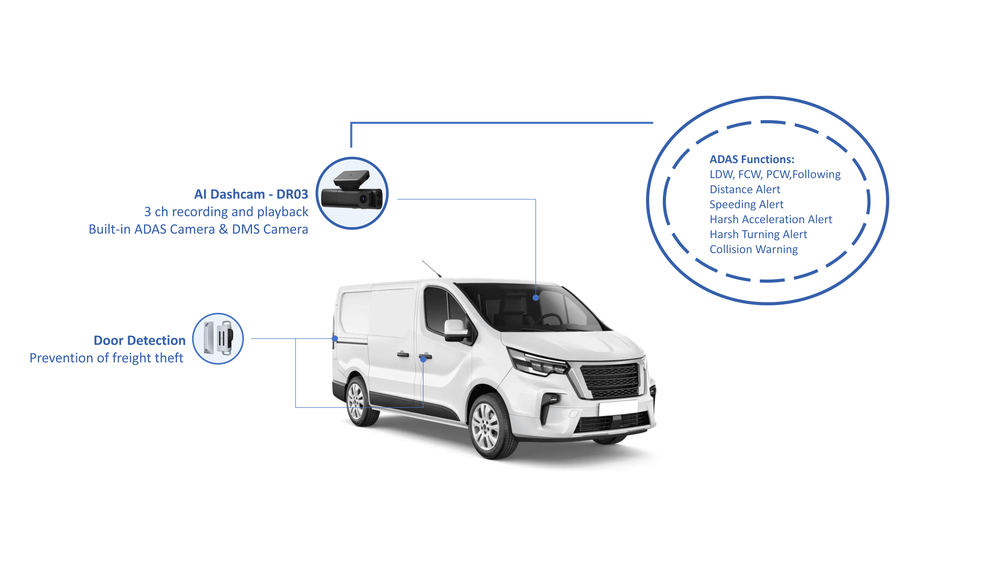
Start with the problem
Fleets lose time and money to three repeat offenders: unclear incident footage, inconsistent driver coaching, and gaps between GPS data and what actually happened on the road. You can have perfect telematics and still argue over liability. An AI dashcam cuts through that noise by pairing video evidence with contextual data, so managers don’t guess and drivers get concrete feedback. The FMCSA’s commercial safety focus makes clear why recorded, contextual footage matters for compliance and risk reduction.
What goes wrong without video
Common consequences of relying on GPS and reports alone:- Disputed accident timelines because GPS shows location but not conditions.- Coaching based on speed or harsh-brake events that lack behavioral context.- Claims costs that rise when footage is unavailable or low quality.Video fills those gaps by showing what sensors can’t: visibility, road signage, and driver attention. That clarity changes post-incident outcomes and improves day-to-day coaching.
How to integrate dash cams with your stack
Don’t bolt on hardware and call it done. Integration matters. Start by mapping data flows: video timestamps must align with GPS telemetry and driver IDs. Look for systems that stream events to your reporting suite, tag clips by incident type, and support automated upload on cellular or Wi‑Fi. If you want an option that pairs visual context with fleet software, consider a dash cam for fleet vehicles that supports metadata exports and API hooks—so your safety reports and payroll audits reference the same source of truth.
Common deployment mistakes and how to avoid them
Avoid these predictable errors:- Installing cameras but neglecting bandwidth planning—uploads stall and footage vanishes.- Using low-resolution units—details matter for insurance and coaching.- Skipping driver buy-in—explain privacy limits and use footage for coaching, not punishment.Fixes are simple: test upload windows, choose 1080p+ sensors with night vision, and publish a short policy that explains when recordings are reviewed and retained.
Quick checklist for choosing the right dash cam
Pick a solution that checks these boxes:- Synchronized timestamps with your GPS and driver roster.- AI-driven event tagging to reduce manual review time.- Secure cloud storage and role-based access.- Straightforward API or integrations for reports.This set keeps reviews focused and makes coaching scalable without bloated admin work.
Synthesis: pick tools that show, don’t guess
Problems start when data sources don’t talk to each other; the fix is hardware and software that speak the same language and deliver clear context. Choose solutions that align video, telemetry, and driver records so managers act on facts and drivers get specific, fair feedback. That practical alignment is exactly what fleet teams need long-term, and it’s the kind of capability I’ve seen integrated successfully by partners such as BSJ when fleets demand usable footage, clean metadata, and manageable reporting.