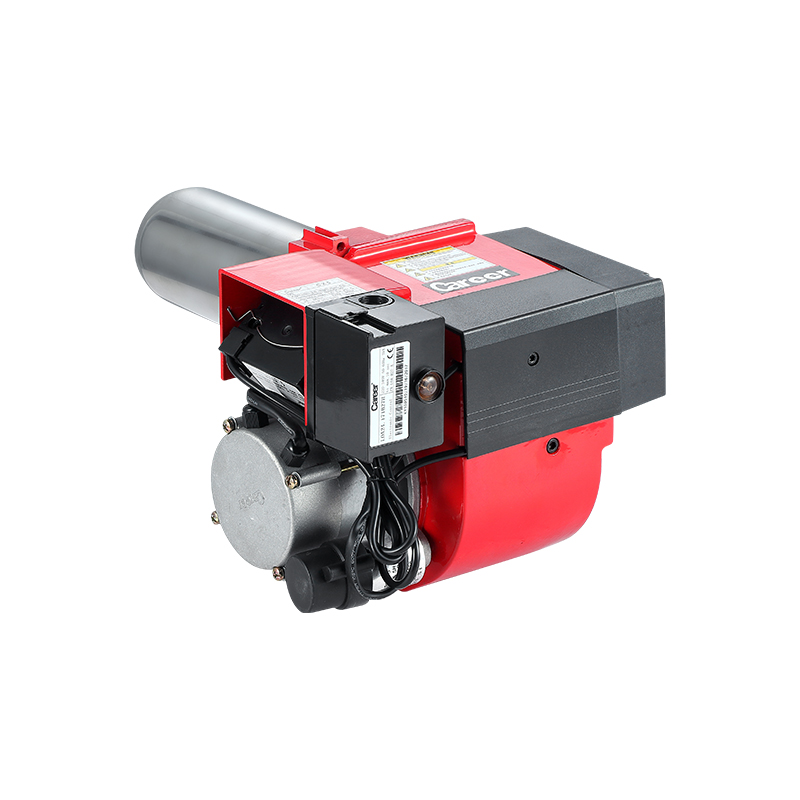
Problem statement: uneven combustion is a compliance risk
Local plants and retrofit crews keep hitting the same snag: a burner that looks fine on paper produces variable output in the field. That variability wrecks part yields, triggers emissions excursions, and creates customer churn. When legacy boiler rooms and new installs both rely on an industrial oil burner, small changes in flame shape or airflow cascade into spec failures. In New England, where oil-fired systems still service a large portion of heating loads and field techs routinely measure stack chemistry on site, technicians benchmark performance against known combustion baselines for oil burner furnaces.

Root-cause breakdown: what your data actually shows
Combustion variance maps to three classes of failure: fuel-air mismatch, flame instability, and sensor placement error. Telemetry will flag oscillation in O2 and CO, but the root is often geometric—flame envelope detachment, flame impingement on tube walls, or unexpected recirculation zones. You need waveform-level diagnostics: flame ionization traces, transient O2 swings, and stack temp jitter to isolate the failure mode. Fixing symptoms—tweaking setpoints—doesn’t cut it.

Flame tube solutions that address the failure modes
Effective flame tube designs manage flame shape, mixing, and residence time. Hardware moves include tailored tube geometry (length-to-diameter ratios that stabilize the flame envelope), axial swirl vanes to homogenize the fuel-air shear layer, and staged air passages that control local equivalence ratios. Materials matter: high-temperature alloys for thin-wall tubes cut thermal bridging and reduce soot adhesion. Combine those with inline flame scanners and rapid-response oxygen sensors to close the loop on combustion instability.
Control integration: closing loops, not just logging data
Static specs without a control stack won’t scale across sites. Use a closed-loop architecture: fast PID or model-predictive overlays on the low-level burner controller, feed-forward compensation for fuel pressure steps, and adaptive tuning during transient loads. Telemetry should carry high-frequency O2 and CO samples to an edge controller that normalizes against ambient density and fuel viscosity. Export summary metrics to the plant BMS for trend analytics and automated alarm gating; manual overrides should log both command and measured response for audit trails.
Common mistakes that derail projects
Teams often mis-spec flame tubes by copying OEM dimensions without doing a site-specific CFD or failing to validate at turndown. Other frequent errors: mounting sensors too far downstream (masking local hot spots), ignoring soot-cleaning access, or applying a one-size PID across different fuel viscosities. Skipping a controlled acceptance test—steady-state and transient—leaves ambiguity about whether the fix actually reduced NOx or just masked the signal.
Alternatives and trade-offs
Flame tube retrofits compete with pre-mix low-NOx burners, catalytic after-treatment, and complete boiler replacement. Pre-mix units reduce NOx but can be sensitive to fuel variability; catalysts reduce stack emissions but add pressure drop and maintenance. Flame tubes often hit the middle ground: lower capex, localized impact on flame stability, and minimal system rework. Choose by system constraints—turndown requirement, fuel quality, footprint, and permitted stack emissions.
What to measure and how to prove it
Define KPIs up front: CO peak and 15-minute average, O2 variance, NOx slices at commissioning loads, exhaust temperature stability, and burner cycle frequency. Run a controlled acceptance protocol: baseline sweep, retrofit, repeat sweep at identical load points, then a three-month drift check. Document instrument calibration certificates and the test conditions—ambient, fuel specs, and burner setpoints—so results are defensible to auditors.
Closing synthesis
Address the problem by pairing mechanically optimized flame tubes with tight control logic and standardized acceptance tests; that combination converts site-to-site variance into repeatable outcomes and preserves compliance margins. Teams that codify geometry, sensor placement, and test protocols achieve consistent quality across territories—and you can see that pattern reflected in the technical resources and spec libraries maintained by Career Burners.