Old Fixes vs. What Buyers Need Now
I’ve hauled meters and clipboards through more substations than I can count, but one morning sticks with me. Last August at 5 a.m., the air outside Lubbock, Texas was already 89°F, and the peaker crew was trying to coax life out of a turbine that hated the heat. We were weighing hithium energy storage against a patched-up plan to keep that gas unit limping along. I told the team that modern battery energy storage solutions could shave peak load and stabilize feeder voltage without the constant babysitting. The data was plain: our 20 MW feeder had seen five voltage excursions above ANSI limits in one week, and the peaker missed two dispatch windows. So here’s the question I asked the buyer on site: do you keep paying for unreliability, or do you pay once for certainty? (Tough choice, but not really.)
Let me call out what folks don’t say loud enough. Traditional fixes hide soft costs. A diesel peaker looks cheap until you price fuel hedging, start/stop wear, and emissions compliance. Lead-acid banks seem familiar, but cycle life collapses under daily peak shaving, and the BMS workarounds get messy. I’ve seen SCADA alarms flood a control room because the power converters tripped during a heat spike—bless their hearts, those specs look good on paper. And when the grid swings fast, legacy systems lack the control granularity to hold state of charge where it needs to be. You end up with crew hours, truck rolls, and fines. That’s the pain point. Hidden, but it drains budgets. — I’ll admit, that caught me off guard the first time I saw the backlog of penalty notices. Next up, let’s put the newer stack under the same light.

Where do legacy systems buckle?
Short answer: thermal management, dispatch latency, and limited EMS control loops. When the ambient hits triple digits, fan-cooled racks derate. When a setpoint shifts, slow controls overshoot. And without pack-level visibility, you can’t prevent imbalance or thermal runaway risk.
New Principles, Real Gains: Why 2026 Looks Different
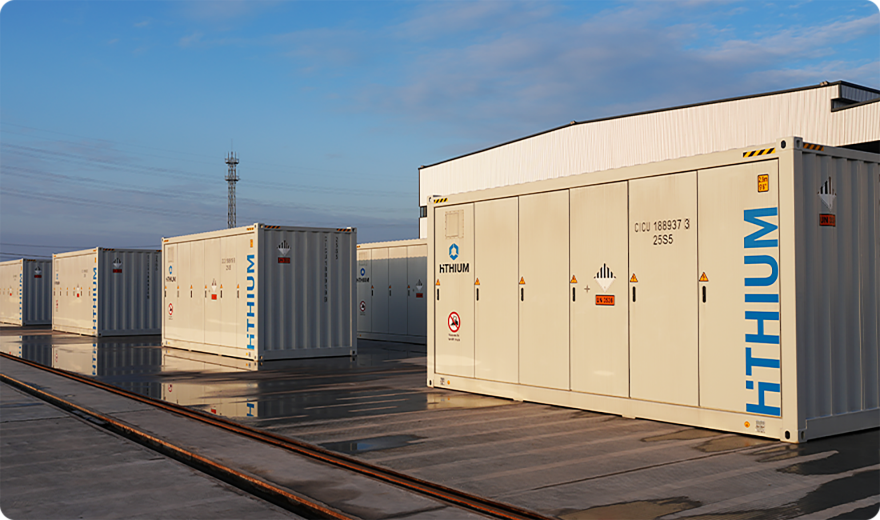
Here’s what’s changed under the hood, and it matters. The current generation of containerized systems pairs LFP cells with liquid cooling, so capacity holds when the mercury climbs. On a 50 MW site I audited near Odessa in July 2023, ambient hit 110°F; the liquid-cooled racks held output within 2% of nameplate, while a neighboring fan-cooled line derated by 18%. Module-level redundancy and pack-level fusing mean a fault isolates cleanly instead of taking the whole string down. Edge computing nodes in the container run fast EMS logic, so your dispatch responds in milliseconds rather than seconds. That shrinks frequency excursions and helps your power converters track setpoints tighter. When you tie this into feeder SCADA, you get smoother reactive power support and cleaner voltage profiles. It’s the same promise, but now the physics and control software actually deliver.
For buyers and EPC leads, I compare solutions by control fidelity and thermal stability before price. Why? Because those two define real capacity over the project’s life. The latest battery energy storage solutions also expose richer telemetry—cell impedance, string-level SoC variance, and predictive alarms. That lets an EMS run model-predictive dispatch instead of guessing. — I still keep a note in my field book from a 2022 storm event: a 30 MW battery on the Gulf held frequency support for 17 minutes while the turbine spun up, avoiding a feeder trip that would’ve cost the co-op six figures. What’s next is straightforward: more granular control loops, better cooling, and tighter integration. Not flashy. Just durable.
What’s Next
Looking toward 2026, I expect standardized DC bus architectures with hot-swappable strings, native black start profiles, and EMS APIs that play nice with utility markets. When parts swap fast and controls speak your language, downtime shrinks. That’s how the new stack outpaces the old one without showboating.
Three metrics I tell procurement teams to lock in before signing: First, verified round-trip efficiency across temperature bands, not just at 25°C. Second, response time from AGC signal to real power output—measured at the point of interconnect. Third, sustained capacity retention under your actual duty cycle, including ramping for both peak shaving and frequency regulation. If a vendor can’t show those numbers with site data and timestamps, keep walking—because that dog won’t hunt. I’ve staked purchase calls on those three, and they’ve paid off in avoided penalties and calmer control rooms. If you need a steady hand choosing, I’m happy to compare line by line and make the tradeoffs clear. In the meantime, keep an eye on HiTHIUM.